Mortgage rates have moved down to roughly 6 percent, their lowest level in more than three years. After a prolonged stretch above 7 percent, that shift meaningfully improves affordability and has the potential to bring sidelined buyers back into the market. The larger question for 2026 is not whether demand returns. It is whether housing supply and new construction can respond fast enough to meet it.
A new Realtor.com housing report notes that easing rates are already coinciding with a gradual rise in active listings and longer days on market. That combination points to early signs of balance after years of severe seller advantage. Buyers are seeing more choices and slightly less competition than at any time since before the pandemic housing surge.
Lower financing costs expand purchasing power quickly. Even modest rate declines can bring millions of households back into qualifying range for a typical mortgage payment. That dynamic is why economists broadly expect home sales to improve as borrowing costs normalize through 2026.
Yet the supply side of the market remains structurally tight. A Reuters housing analysis this week highlighted that new home inventory recently fell to a multi-year low even as mortgage rates approached 6.01 percent. Builders have remained cautious after the volatility of the past several years, limiting project pipelines and keeping overall supply constrained.
This imbalance creates a pivotal moment for the housing cycle. Demand typically responds first when rates fall. Buyers who delayed moves due to affordability begin reentering. Household formation that continued during the high-rate period converts into actual transactions. Move-up owners reconsider selling once financing becomes more manageable.
But supply reacts more slowly. The so-called rate lock-in effect continues to discourage existing homeowners from listing. Millions refinanced below 4 percent earlier in the decade and remain reluctant to trade into higher borrowing costs. Until mortgage rates fall closer to the mid-5 percent range, resale inventory is likely to remain limited.
That places unusual weight on new construction. Builders now hold the primary lever that determines whether lower rates translate into more sales volume or simply higher prices. Early data suggests construction activity has begun to rebound modestly as developers anticipate improved buyer demand in 2026. If that trend accelerates, the market could shift toward healthier balance.
The alternative is less favorable. If new supply remains constrained while rates fall, competition for available homes will intensify. That scenario would push prices upward again and offset some of the affordability gains from lower mortgage costs. Buyers would face improved financing but limited choice, a dynamic already familiar from earlier in the cycle.
For households considering a purchase, the environment is improving but not uniformly. Financing conditions are better than a year ago, yet waiting for dramatically lower rates may not produce more opportunity if inventory remains tight. Timing decisions will depend as much on local supply trends as on mortgage levels.
For builders and sellers, the signal is clearer. The next stage of the housing market will be shaped less by interest rates themselves and more by how quickly housing supply expands in response. Mortgage rates have reopened the door to activity. Whether the market moves through it now depends on construction catching up with demand.
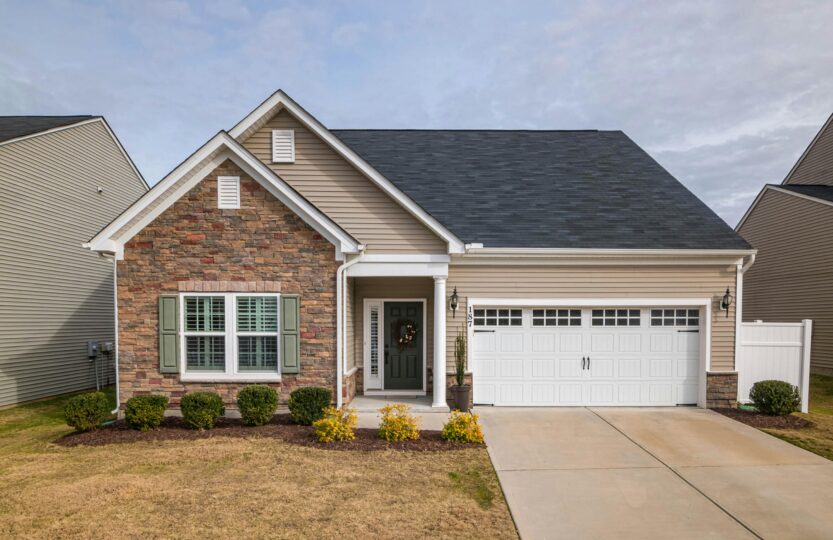
Photo by Curtis Adams: https://www.pexels.com/photo/photo-of-house-3555615/